
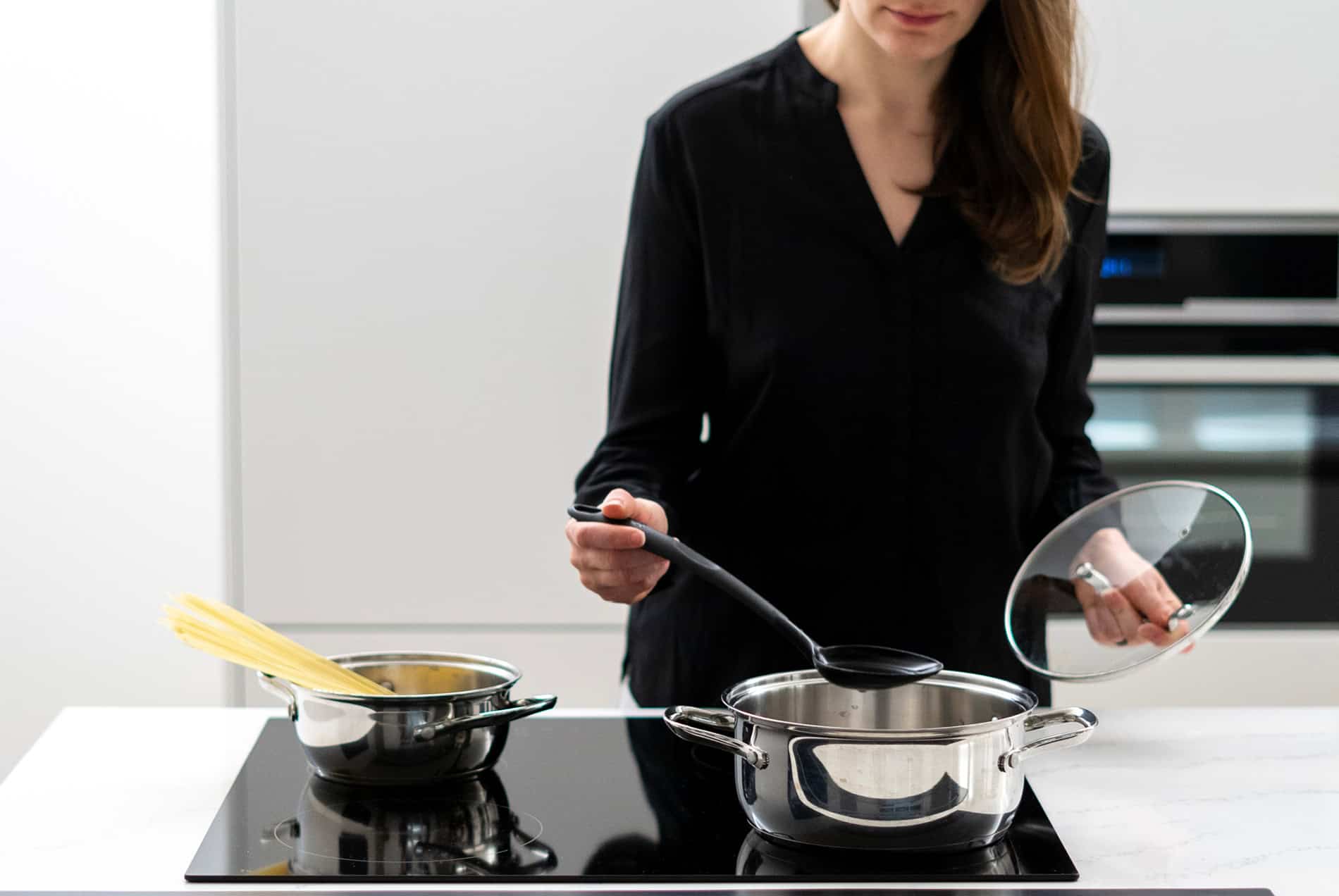
In a previous article on the hobswe have provided you with a brief buying guide to the types currently on the market, indicating the differences between a gas hob and an induction hobone and highlighting the advantages of choosing an induction hobone that features a highest thermal efficiency and aenergy efficiency double that of the conventional induction tableone.
In this in-depth study, we want to give you some useful advice on how to cook with the ceramic hobone.
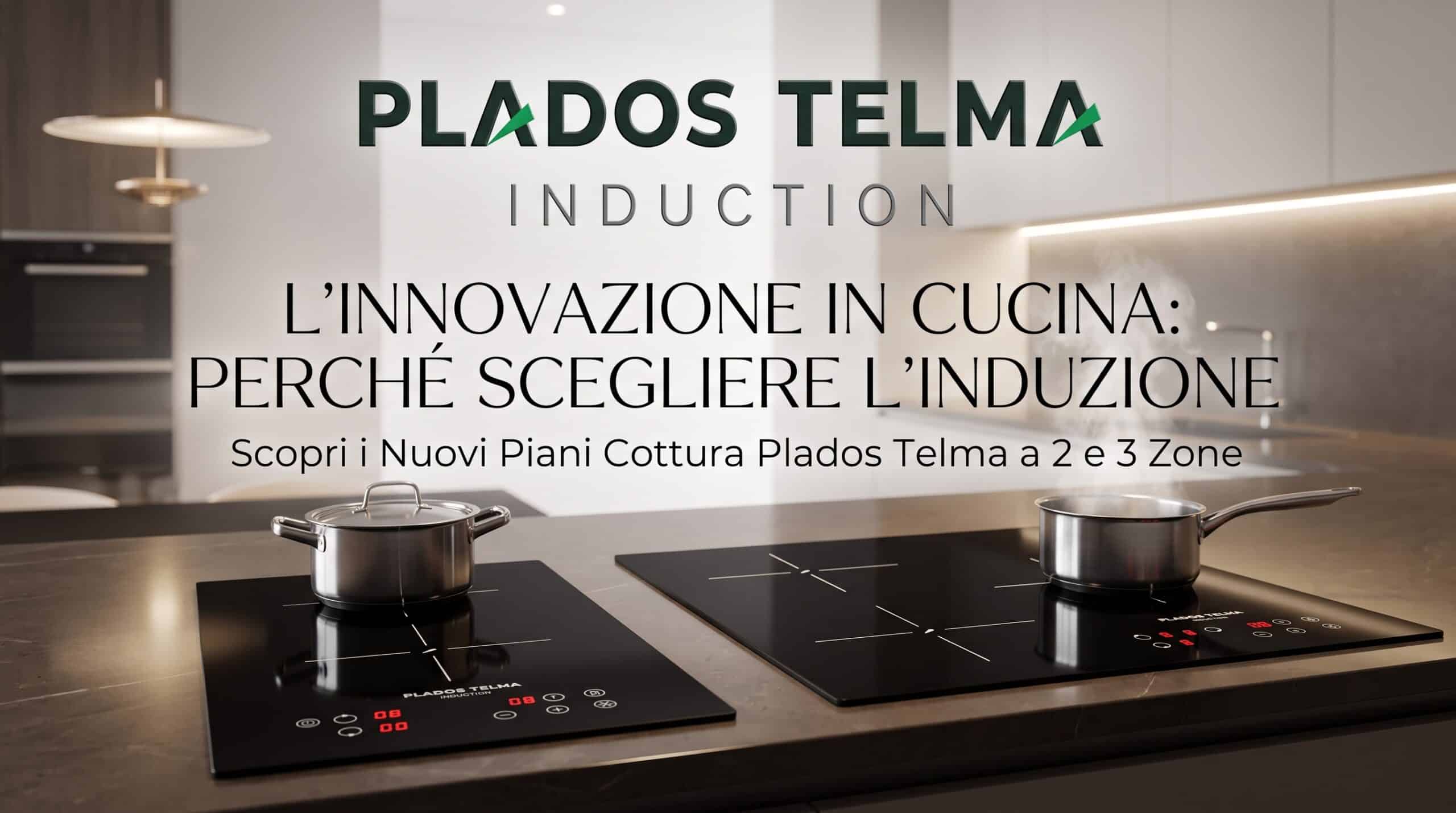
< Scopri i piani cottura a induzione di Plados Telma! Clicca qui >
The first substantial difference between a conventional hob and an induction hobone is that the induction hobone has a flat surface; it follows that the pans used for cooking are in direct contact with the surface of the hotplate generating heat.
The induction hobone transmits the heat directly to the food and not around the pan, without heat loss, ensuring a important reductionone in cooking time. With an induction hobone, the water for pasta boils in half the time of a conventional hob. So while it is true that an induction hobone runs on electricity, it is also true that the reduction in cooking time also reduces the consumption of electricity.
Another important advantage of the cooker with the induction hobone is thehomogeneity of food cookingwhatever the cooking technique, e.g. frying or grilling, browning or stir-frying, boiling or steaming. In the case of the traditional hob, the heat is more intense in the centre and less intense at the sides, on the contrary, with the induction hobone, the heat emitted is the same and the food is subjected to a constant heat source at the centre and sides.
There is no cooking that cannot be done with the induction hobone, the only conditionone necessary for its use is having adequate pots and pans; yes to steel, cast iron, stainless steel and no to ceramic, copper or glass.
 English (UK)
  Italiano
  Français
  Español
  简体中文
简体中文  Polski